
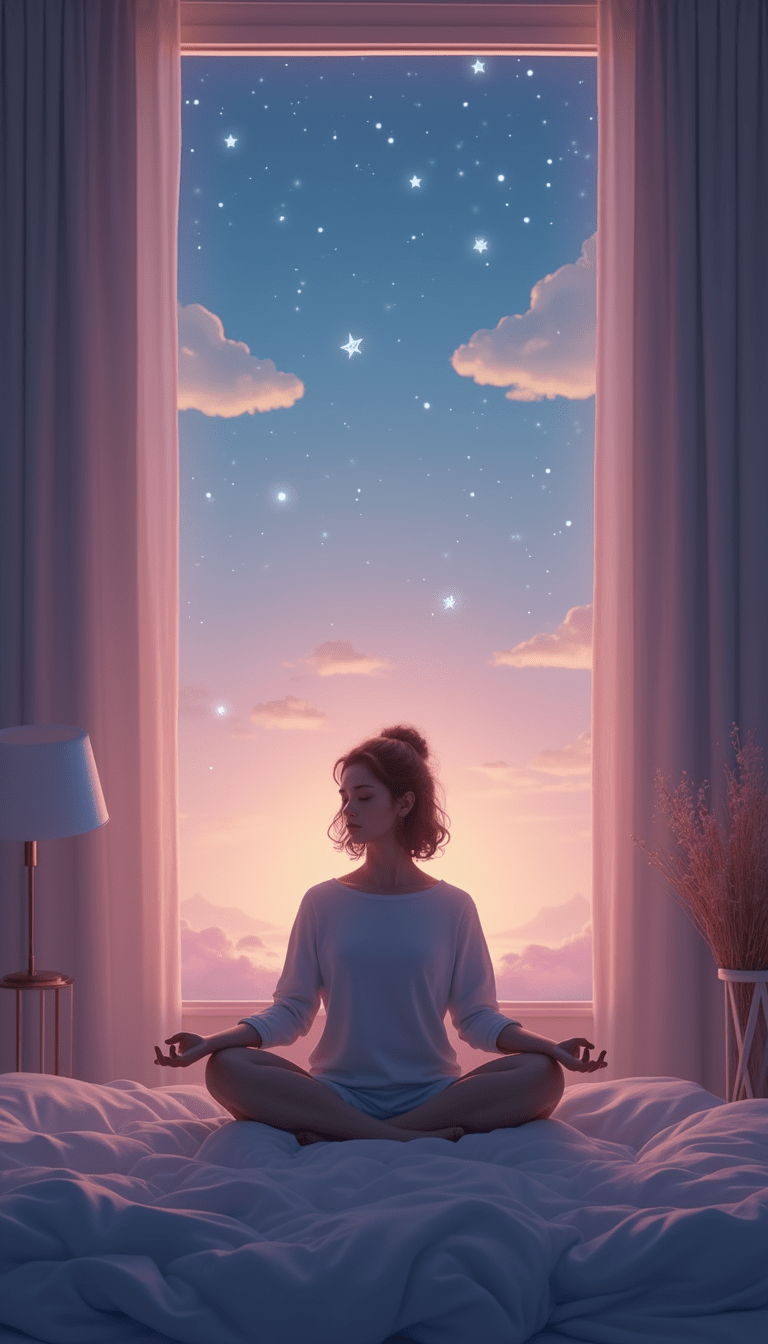
Harness the Power of Visualization to Improve Your Sleep 🌙🧘♀️✨
1. Introduction
Feeling restless at night or struggling to fall asleep? Many people are turning to visualization for sleep as a natural, non-invasive method to promote relaxation and restful slumber. The practice of guided imagery sleep relaxation leverages the power of your mind to create calming mental images that ease your body into sleep. In this article, we explore effective visualization techniques and how they can transform your nightly routine.
2. What Is Visualization for Sleep?
Visualization for sleep involves mentally picturing peaceful, calming scenes that help reduce anxiety and promote tranquility. This process taps into your subconscious mind, calming racing thoughts and preparing your mind and body for rest. It’s related to mental visualization and sleep meditation, both proven to ease sleep difficulties when practiced consistently.
3. Benefits of Visualization Techniques for Better Sleep
Implementing visualization techniques offers numerous advantages:
- Reduces stress and anxiety that interfere with sleep
- Enhances overall sleep quality and duration
- Creates a relaxing pre-sleep environment without medications
- Can be combined with other sleep hygiene practices for optimal results
4. Effective Visualization Techniques to Improve Sleep
Creating a Peaceful Scene
Imagine yourself in a serene environment — a quiet beach, lush forest, or gentle mountain stream. Focus on sensory details: the sound of waves, the feel of soft grass, or the warmth of the sun. This guided imagery sleep relaxation technique helps your mind drift into calmness.
Breathing and Visualization Combo
Combine deep, slow breaths with visualizing a calming scene. Inhale slowly as you picture the scene, and exhale any tension. Repeating this cycle reinforces relaxation.
Progressive Relaxation with Visualization
Start by tensing and relaxing muscle groups, then visualize each relaxation wave spreading through your body. This synergistic approach enhances the effectiveness of sleep meditation.
5. How to Practice Guided Imagery Sleep Relaxation
Follow these steps to incorporate visualization into your bedtime ritual:
- Lie down comfortably in your bed, turn off bright lights, and minimize distractions.
- Close your eyes and take several deep breaths, inhaling peace and exhaling tension.
- Visualize a peaceful scene, engaging all your senses to make it vivid.
- Maintain this imagery for 5-10 minutes, allowing your mind to relax deeply.
- Gradually let the scene fade as you drift into sleep naturally.
6. Overcoming Common Challenges with Visualization
Some may find it difficult to focus or quiet the mind. Tips include:
- Start with short sessions and gradually increase duration
- Use calming music or white noise to mask external sounds
- Practice visualization earlier in the evening to develop comfort
- Be patient and consistent; the benefits grow over time
For more strategies, explore visualization techniques to achieve calm and relaxation.
7. Additional Tips for Enhancing Sleep with Visualization
- Maintain a regular sleep schedule
- Limit screen time before bed
- Combine visualization with other sleep aids like sleep routine improvements
- Use aromatherapy to create a soothing environment
- Try incorporating gentle stretches or yoga to relax muscles before visualizing
8. Recommended Resources & Tools for Visualization and Sleep
Enhance your practice with these helpful tools:
- BookRetreats.com: The World’s #1 Retreat Site — Find retreats focused on relaxation and sleep improvement.
- Red Light Therapy devices, such as Red Light Therapy for Body, may assist in overall relaxation and sleep readiness.
- Supplements or guided meditation apps can augment your visualization practice. Explore options linked above for support.
9. Conclusion
Harnessing the power of visualization for sleep can significantly improve the quality and quantity of your rest. By engaging your imagination through guided imagery sleep relaxation, you can calm your mind, reduce anxiety, and pave the way for restful nights. Remember, consistency is key — incorporate these techniques into your nightly routine and enjoy the benefits of peaceful, rejuvenating sleep.
1 thought on “Harness the Power of Visualization to Improve Your Sleep”